ReMode
We are five second-year students from fashion technology at HoGent.
The first semester of the second year we worked on the ReMode project, where we turn old jeans into a new garment and strive for zero waste.
Mission
We got to work with post-consumer waste. We have designed and created a top and an accessory that completely fit River Woods' DNA. Both products meet certain criteria and can be produced in runs of minimum 300 pieces. To meet these criteria, our team put together a thoughtful design, production strategy and production cost calculation.
Design
This design has a modern, structured look with a small collar, tapered sleeves, and defined seam lines. The cinched waist and straight hem create a timeless style.


Prototype
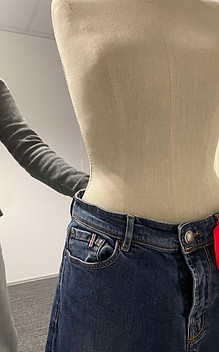
We decided that the collar should be replaced with a V-neck, side seam pockets should be added, and the facing should be made slightly bigger, and the jeans pockets should be removed to suit the design better.
Work items
Technical pack
-
Technical Pack - General
-
Technical Pack - Disassembly
-
Technical Pack - Assembly
-
Technical Pack – Quality
Process
-
Value Stream
-
Process Analysis
-
Process Optimization
-
Time Measurement
-
Objectives and KPIs




My work
In this project, each of us took on specific responsibilities, allowing us to work more efficiently and collaborate effectively as a team. My work included creating the technical drawings, the finances, drawing various seam symbols, and outlining the required condition of the jeans. By dividing the tasks, we streamlined the process and ensured a high-quality outcome.

Technical drawing
I worked on the technical pack by handling style images, colors, construction details, and seam symbols. I also assembled everything into one file and ensured consistent layout across all pages.
Finances
I managed the project finances by requesting material quotations, calculating material needs, and creating the bill of materials. Additionally, I calculated the bill of labor based on time measurements.
Criteria jeans


Result
Jacket


Accessory


Conclusion
This project gave me valuable insights into clothing production and taught me to plan more effectively with the production process in mind. Our teamwork was strong, and I’m proud of what we achieved.
However, there were areas for improvement. A clear plan at the start would have provided better structure, and stronger communication within the team could have prevented some issues. Additionally, working in Dutch first and then translating to English led to unnecessary double work.
Overall, it was a rewarding experience with important lessons for the future.
